Where You Store Your CBD Is Quietly Destroying It: A Format-by-Format Breakdown
There is a reasonable assumption most people make when they purchase a CBD product: that it will remain roughly as potent as advertised until the expiration date printed on the label. That assumption deserves scrutiny.
The bathroom medicine cabinet. The kitchen shelf near the stove. The windowsill beside the bed. These are among the most common places Americans store their health and wellness products—and they represent some of the most hostile environments possible for cannabinoid preservation. Heat, moisture, and light are the three primary agents of cannabinoid degradation, and the average American home delivers all three in generous supply.
What makes this worth examining carefully is that not all CBD product formats respond to these conditions equally. Understanding which formats are genuinely resilient—and which ones quietly lose their potency within weeks of a bad storage decision—is practical, money-saving information that most product labels never volunteer.
Why the Environment Inside Your Home Is a Problem
Cannabidiol is a chemically active compound. Exposure to ultraviolet light accelerates its oxidation. Heat above roughly 77°F (25°C) speeds up the chemical reactions that break down cannabinoids into less active or inactive byproducts. Humidity introduces moisture that can compromise carrier oils, degrade capsule shells, promote microbial growth in organic-based products, and alter the texture and consistency of topicals.
The average bathroom experiences significant temperature swings during and after hot showers, with relative humidity levels that routinely exceed 70 percent. Kitchen cabinets near stoves or dishwashers face similar heat exposure. A south-facing windowsill compounds all of these problems with direct UV exposure.
None of this is hypothetical. Published research on cannabinoid stability consistently identifies light, heat, and oxygen as the dominant degradation factors—and those findings translate directly to real-world storage choices.
Tinctures and Oils: The Most Vulnerable Format
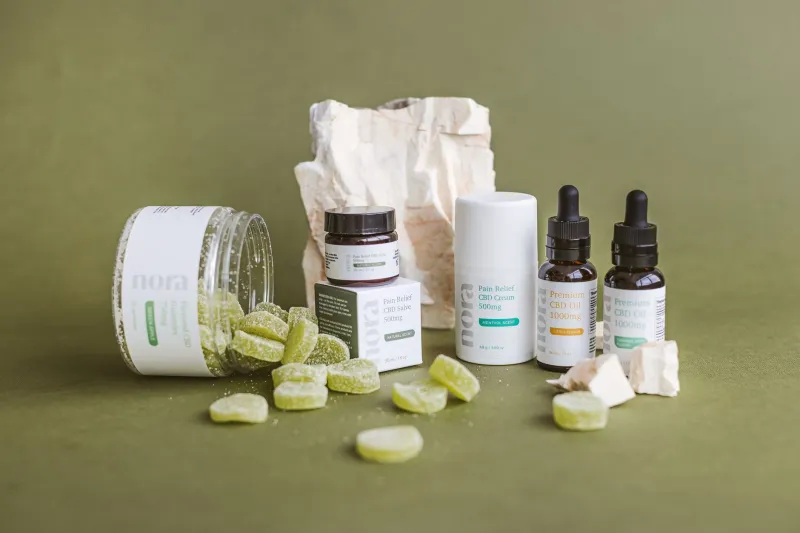
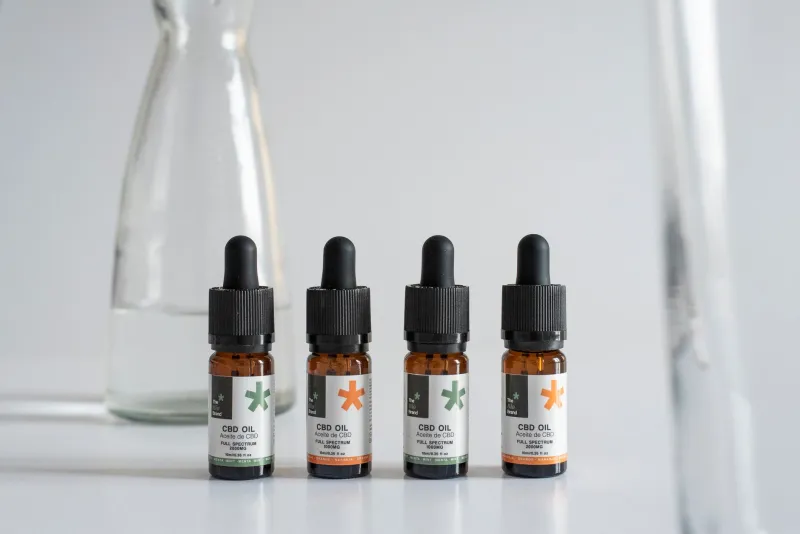
CBD oils and tinctures are among the most popular formats on the market, and they are also among the most sensitive to poor storage conditions. The active cannabinoids are suspended in a carrier oil—commonly MCT oil, hemp seed oil, or olive oil—which itself is subject to oxidative rancidity when exposed to heat and light.
Dark glass bottles provide meaningful protection against UV exposure, and most reputable manufacturers use them for exactly this reason. However, once a bottle is opened and partially used, air enters the headspace above the liquid and oxidation begins in earnest. Storing an open tincture in a warm, humid bathroom can measurably accelerate this process.
For practical purposes: tinctures belong in a cool, dark location—ideally a drawer or cabinet away from heat sources—with the cap secured tightly after each use. Refrigeration is acceptable and often beneficial for extending shelf life, though some carrier oils may thicken at lower temperatures.
Softgels and Capsules: Better Protected, But Not Immune
CBD capsules and softgels offer a meaningful structural advantage over open-format liquids. The encapsulation itself creates a barrier against oxygen and light exposure for the cannabinoid-infused oil inside. This makes them inherently more stable during storage than tinctures, assuming the capsule shell remains intact.
The vulnerability here is the shell itself. Gelatin-based softgels are hygroscopic—they absorb moisture from the surrounding environment. In a bathroom cabinet with regular humidity spikes, softgel shells can become tacky, fuse together, or eventually crack, exposing the contents to the very conditions the encapsulation was designed to prevent. Plant-based capsule alternatives show somewhat better moisture resistance, though they are not immune.
Capsules stored in their original sealed packaging, in a cool and dry location, represent one of the more shelf-stable CBD formats available to consumers. The mistake is transferring them into non-airtight containers or leaving the bottle open in a humid environment.
Edibles and Gummies: Stability Varies Widely by Formulation
CBD-infused gummies and edibles present a more complex picture. The cannabinoid content in most gummies is encased within a sugar-based matrix that offers some physical protection, but that matrix is also highly susceptible to moisture and heat in ways that affect both the product's integrity and its cannabinoid content.
Heat is the primary concern. Gummies stored in a warm kitchen cabinet can soften, melt together, or undergo structural changes that alter how the CBD is distributed throughout the product. Whether this translates directly to potency loss depends on the specific formulation and the temperatures involved, but consumers who have opened a summer-warm bag of gummies to find a fused, misshapen mass are observing a real degradation event—not merely a cosmetic one.
Peculiar to edibles is the additional variable of added organic ingredients. Products containing real fruit, dairy, or other perishable components carry their own spoilage timelines that may be shorter than the cannabinoid degradation timeline. In these cases, the food safety concern arrives before the potency concern.
For most standard gummies: a cool, dry location away from direct light is the minimum requirement. Refrigeration extends shelf life substantially and is particularly advisable during warmer months.
Topicals: The Format Most Consumers Treat Carelessly
CBD creams, balms, salves, and lotions are frequently stored in the most problematic location of all: the bathroom shelf. The logic is intuitive—topicals are applied to the skin, and the bathroom is where personal care products live. The problem is that this logic ignores what the bathroom environment does to those products over time.
Most topical formulations are emulsions—mixtures of water and oil held together by emulsifiers. Heat and humidity can destabilize these emulsions, causing separation, texture changes, and accelerated microbial growth if the product's preservative system is overwhelmed. Cannabinoids suspended in the topical's oil phase are also subject to the same oxidative degradation that affects tinctures.
Beyond the cannabinoid stability question, a topical that has undergone emulsion breakdown or microbial contamination presents a more immediate consumer concern than simply reduced potency. The bathroom is, ironically, the worst place to store the products most people instinctively keep there.
A Practical Hierarchy of Storage Resilience
Ranked from most to least resilient under typical home conditions, CBD product formats generally fall in this order:
- Sealed capsules and softgels — best overall structural protection, provided humidity doesn't compromise the shell
- Tinctures in dark glass with tight seals — good protection when unopened; vulnerability increases with use
- Standard gummies in sealed packaging — reasonably stable when cool and dry; highly vulnerable to heat
- Topicals — most sensitive to the bathroom environments where they are most commonly stored
This hierarchy is not absolute. A tincture stored carelessly in a hot car will degrade faster than a topical kept in a cool drawer. The format matters, but so does the specific decision being made.
The Information Gap on Product Labels
Most CBD product labels offer generic storage guidance—"store in a cool, dry place" is a common instruction—without specifying what temperature ranges are actually appropriate or explaining why the guidance matters. Consumers who understand the underlying science are better positioned to make genuinely protective storage decisions rather than following instructions they cannot evaluate.
The bottom line is straightforward: the location where a CBD product feels convenient to store is frequently the location most likely to degrade it. Matching storage choices to the actual stability requirements of each product format is one of the simplest, least expensive ways to protect both the investment and the intended benefit.