Chasing Milligrams: Why the CBD Industry's Potency Race Is Working Against You
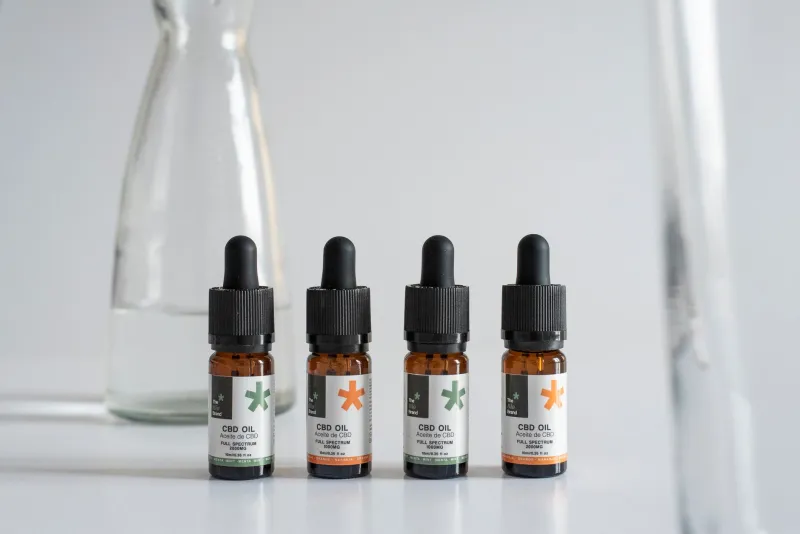
Walk into any health food store in the United States, scroll through a CBD brand's website, or browse a dispensary's wellness shelf, and a pattern becomes immediately apparent: products are marketed in escalating milligram tiers, and the implication is almost always the same. More milligrams equals stronger. Stronger equals better. Better equals worth the premium price.
This logic is simple, intuitive, and largely incorrect.
The potency race in the CBD industry has less to do with clinical outcomes and more to do with competitive differentiation in a crowded marketplace. Understanding why requires a closer look at how CBD actually behaves in the human body — and why the number printed on a label is only one small piece of a much larger picture.
What 'Potency' Actually Measures
When a product is labeled as containing 3,000 mg of CBD, that figure describes the total amount of cannabidiol present in the entire bottle — not the amount your body will absorb, not the amount that will reach your bloodstream, and certainly not the amount that will produce any meaningful physiological effect.
The relevant metric is bioavailability: the proportion of a substance that enters systemic circulation in an active form. For CBD, bioavailability varies dramatically depending on the delivery method. Sublingual tinctures generally offer bioavailability estimates ranging from 13 to 19 percent in available studies. Oral capsules and edibles tend to fall lower, often between 6 and 15 percent, due to first-pass metabolism in the liver. Inhalation methods rank highest, though they introduce their own risk considerations.
What this means in practical terms: a consumer purchasing a 3,000 mg tincture and administering it sublingually may be absorbing somewhere between 390 and 570 mg of that total across the full bottle — assuming consistent administration and reasonably average physiology. The rest is metabolized or excreted before it ever reaches circulation.
Milligram counts on labels, in other words, describe potential — not delivery.
The Dose-Response Curve CBD Brands Prefer You Don't Think About
Early research into cannabidiol has revealed something that complicates the more-is-better narrative considerably: CBD exhibits what pharmacologists call a bell-shaped or inverted U-shaped dose-response curve in certain contexts.
This means that, for specific applications, moderate doses may produce more pronounced effects than either very low or very high doses. A frequently cited preclinical study published in the Brazilian Journal of Psychiatry observed this pattern in anxiety-related responses. Other research has noted similar non-linear relationships in different physiological contexts.
The human endocannabinoid system is not a simple on/off mechanism that responds proportionally to increasing inputs. It involves receptor saturation, feedback loops, and interactions with other neurotransmitter systems that do not scale linearly with dosage. Treating CBD like a supplement where doubling the dose doubles the benefit misrepresents how the compound actually operates at a biological level.
Additionally, the only FDA-approved cannabidiol medication — Epidiolex, used for specific seizure disorders — is administered at carefully calibrated doses relative to body weight. Even in a clinical context where precise dosing is critical, the therapeutic window is defined, not open-ended.
What Happens at Excessive Doses
High-dose CBD is not without documented risks, and responsible consumer guidance requires acknowledging them directly.
The most commonly reported side effects associated with elevated CBD consumption include gastrointestinal disturbance, fatigue, and changes in appetite. More clinically significant is the well-established potential for CBD to inhibit cytochrome P450 liver enzymes — the same pathway responsible for metabolizing a wide range of prescription medications. At higher doses, this interaction risk increases, which carries real consequences for consumers managing chronic conditions with pharmaceutical treatment.
Full-spectrum products at high concentrations also raise questions about cumulative THC exposure. Legally, hemp-derived CBD products must contain no more than 0.3 percent THC by dry weight — but in a 5,000 mg bottle, even trace-level THC adds up across repeated doses in ways that may matter to individuals subject to workplace drug testing or those with particular sensitivity to psychoactive compounds.
None of this means high-potency products are categorically dangerous. It does mean that purchasing them without a clear rationale tied to individual need introduces unnecessary variables.
The Individual Factors That Actually Determine Your Effective Dose
If milligrams alone don't determine effectiveness, what does? The honest answer is that effective dosing is genuinely individualized, and the factors involved are more numerous than most product labels acknowledge.
Body weight and composition influence how lipophilic compounds like CBD distribute through tissue. Individuals with higher body fat percentages may require adjusted doses because cannabinoids are fat-soluble and can accumulate in adipose tissue rather than remaining in active circulation.
Metabolic rate and liver enzyme activity affect how quickly CBD is processed. Genetic variations in CYP2C19 and CYP3A4 — two of the primary enzymes involved in CBD metabolism — mean that two people taking identical doses may experience meaningfully different plasma concentrations and durations of effect.
The condition being addressed is perhaps the most significant variable. Preliminary research suggests that different applications — sleep, localized discomfort, stress response — may involve different optimal dose ranges. There is no universal therapeutic dose of CBD, and consumers should be skeptical of any brand suggesting otherwise.
Product quality and formulation affect how much CBD is actually delivered per serving. Third-party lab testing, extraction method, carrier oil type, and product freshness all influence the actual cannabinoid content reaching your system. A 1,000 mg product from a rigorously tested manufacturer may outperform a 3,000 mg product from a brand with inconsistent manufacturing practices.
A Framework for Finding 'Enough'
Rather than anchoring purchasing decisions to the highest available milligram count, a more methodical approach tends to produce better individual outcomes.
Start with a low dose — typically 10 to 25 mg per serving — and maintain it consistently for at least one to two weeks before adjusting. Cannabidiol's effects are not always immediate, and allowing sufficient time for assessment is important before concluding a dose is insufficient. Keep notes on timing, delivery method, and observed effects.
If adjustment is warranted, increase incrementally rather than dramatically. A 5 to 10 mg increase per interval, combined with continued observation, provides clearer feedback than jumping between widely different concentrations.
Consult a healthcare provider before starting CBD, particularly if you take any prescription medications or have a diagnosed medical condition. This is not a formality — it is a meaningful safeguard given the drug interaction profile discussed above.
Finally, prioritize product quality over product volume. A moderately concentrated product from a brand with transparent third-party testing, clear sourcing information, and consistent manufacturing is a more reliable foundation than a high-milligram product from a brand whose only distinguishing claim is the number on the label.
The Bottom Line
The CBD industry's potency escalation is a marketing phenomenon, not a scientific one. Higher milligram counts generate higher price points and create the perception of premium value — but they do not automatically translate into better results for the consumer.
Real efficacy comes from the intersection of product quality, appropriate delivery method, individual physiology, and patient, methodical dose calibration. None of those factors are captured in a milligram count alone.
For consumers navigating an industry that profits from the assumption that more is always more, understanding this distinction is not just useful — it is the foundation of making genuinely informed purchasing decisions.