Passed a Lab Test Doesn't Mean Safe: The Contaminants Hiding in Your CBD Product
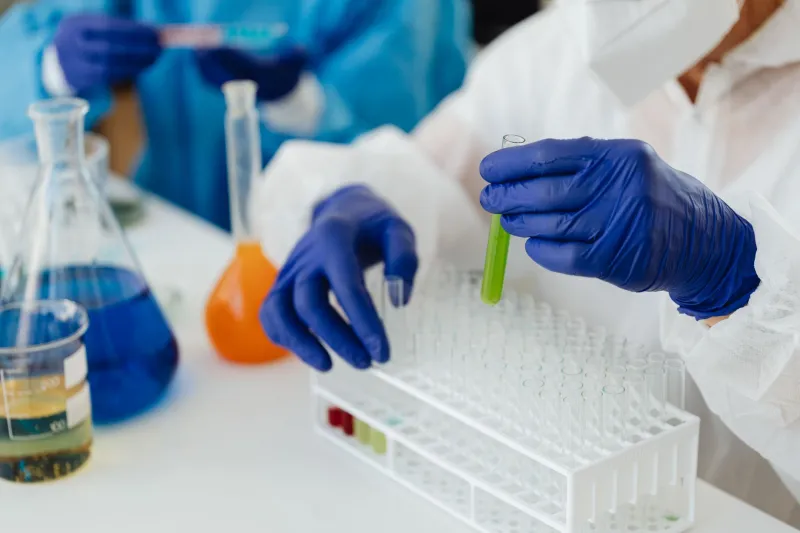
When a CBD brand displays a certificate of analysis—commonly called a COA—on its website, the implicit message is reassuring: this product has been tested and verified. For many consumers, that document functions as the final word on safety. It shouldn't.
The reality is more complicated, and frankly more concerning. Third-party lab testing in the CBD industry operates without a federal mandate for what must be screened. That absence of standardization means a product can carry a COA showing clean potency numbers while harboring contaminants that were simply never looked for. Understanding what those gaps look like—and why they exist—is essential for anyone making purchasing decisions based on safety assumptions.
Why CBD Testing Standards Remain a Patchwork
The 2018 Farm Bill legalized hemp cultivation at the federal level, but it did not create a unified consumer safety framework for hemp-derived CBD products. The FDA has acknowledged its authority over CBD-containing products but has not yet issued comprehensive regulations governing mandatory testing requirements. That regulatory vacuum has pushed the burden onto state-level programs and voluntary industry practices—neither of which is consistent.
Some states with active hemp programs, such as Colorado and Oregon, have established relatively detailed testing requirements for licensed producers. Others impose minimal oversight. And for products sold online and shipped across state lines—which represents a substantial share of the CBD market—there is no single governing standard at all.
The result is that "third-party tested" can mean almost anything. A COA might confirm cannabinoid potency and residual solvent levels while saying nothing about whether the product contains lead, arsenic, or chlorpyrifos.
The Heavy Metal Problem in Hemp
Hemp (Cannabis sativa) is a bioaccumulator. This is not a criticism of the plant—it is a well-documented botanical characteristic. Hemp absorbs compounds from the surrounding soil through a process called phytoremediation, which has actually been studied as a method for cleaning contaminated land. The same property that makes hemp useful for soil remediation makes it a potential vehicle for delivering whatever that soil contained.
Lead, cadmium, arsenic, and mercury are the heavy metals of greatest concern. Chronic exposure to even low concentrations of these elements is associated with neurological damage, kidney dysfunction, and increased cancer risk. The FDA has established limits for heavy metals in dietary supplements, but enforcement in the CBD space remains inconsistent, and brands are not universally required to test for them.
Farm sourcing matters enormously here. Hemp grown on land with a history of industrial use, mining activity, or heavy pesticide application carries elevated contamination risk. Yet most COAs consumers encounter do not include heavy metal panels—or if they do, the panels may test for only one or two metals rather than the full spectrum of concern.
Pesticide Residues: An Underreported Risk
Pesticide use in hemp cultivation is a more nuanced issue than many consumers realize. Because hemp was a federally controlled substance until 2018, the EPA had not established pesticide tolerance limits for hemp prior to legalization. That regulatory gap is still being addressed. As of this writing, the EPA has approved only a limited number of pesticides for use on hemp, and tolerance levels remain incomplete for many compounds.
This creates a practical problem: farmers may apply pesticides that are legal on other crops but have no established safe residue level for hemp. Testing labs, in turn, may not screen for those specific compounds. A COA that shows pesticide testing "passed" may reflect a panel of 60 commonly screened pesticides while missing dozens of others entirely.
Some of the most concerning pesticide classes—organophosphates, pyrethroids, and certain fungicides—are not universally included in standard hemp testing panels. Consumers who assume a pesticide "pass" means a comprehensive clean bill of health are working from an incomplete picture.
Microbial Contamination: The Risk That Grows in Storage
Beyond chemical contaminants, microbial contamination presents a distinct category of concern. Hemp biomass can harbor mold, yeast, E. coli, and Salmonella, particularly when improperly dried or stored before processing. Extraction processes can reduce but do not always eliminate microbial loads, and finished products—especially those with water-based formulations like CBD beverages or water-soluble tinctures—can support microbial growth during the product's shelf life.
Standard microbial testing typically screens for total yeast and mold counts, total aerobic bacteria, E. coli, and Salmonella. However, testing is generally conducted at a single point in time, usually at production. It does not account for contamination that develops during shipping, warehousing, or prolonged storage at retail.
For immunocompromised individuals, the elderly, or pregnant consumers—groups that may be drawn to CBD for its reported wellness benefits—microbial contamination carries heightened risk. This is a population that deserves more rigorous safety assurance than current voluntary standards provide.
How to Evaluate a COA More Critically
Given these gaps, the question becomes practical: how can a consumer extract more meaningful safety information from the documentation brands provide?
First, look beyond potency. A COA that shows only cannabinoid content—CBD percentage, THC levels, minor cannabinoids—is a potency test, not a safety test. Real safety documentation requires separate panels.
Second, check which contaminants were actually tested. A legitimate comprehensive COA should include, at minimum: heavy metals (ideally a full panel covering lead, cadmium, arsenic, and mercury), pesticide residues (panels of 100 or more compounds are preferable), residual solvents if an extraction process was used, and microbial contamination markers. If any of these are absent, that is a meaningful omission.
Third, verify the testing laboratory. Reputable labs are ISO 17025-accredited, a certification that indicates technical competence and measurement reliability. Many states with cannabis programs maintain lists of approved testing facilities. If a brand's COA comes from a lab you cannot verify, that warrants skepticism.
Fourth, ask questions directly. Contact the brand and ask whether their testing panel covers the full ISO 17025 scope for contaminants. Ask whether testing is conducted per-batch or only at initial product development. A brand with genuine commitment to safety will answer those questions clearly.
The Broader Consumer Demand Signal
It would be unfair to characterize the entire CBD industry as indifferent to safety. A number of established brands do invest in comprehensive testing and publish detailed, multi-panel COAs voluntarily. The problem is that consumers have no reliable way to distinguish those brands from those offering minimal documentation with maximum marketing confidence.
The most effective lever available to consumers right now is purchasing behavior. When buyers consistently favor brands that provide complete, transparent safety documentation—and ask pointed questions when that documentation is absent—they create a market incentive for more rigorous standards industry-wide.
Federal regulation will eventually catch up. Until it does, treating a COA as a starting point for inquiry rather than a final answer is the most defensible approach available to anyone who takes their health seriously.