Ordered Legal, Delivered Illegal: How CBD Shipping Laws Are Trapping Unsuspecting Consumers
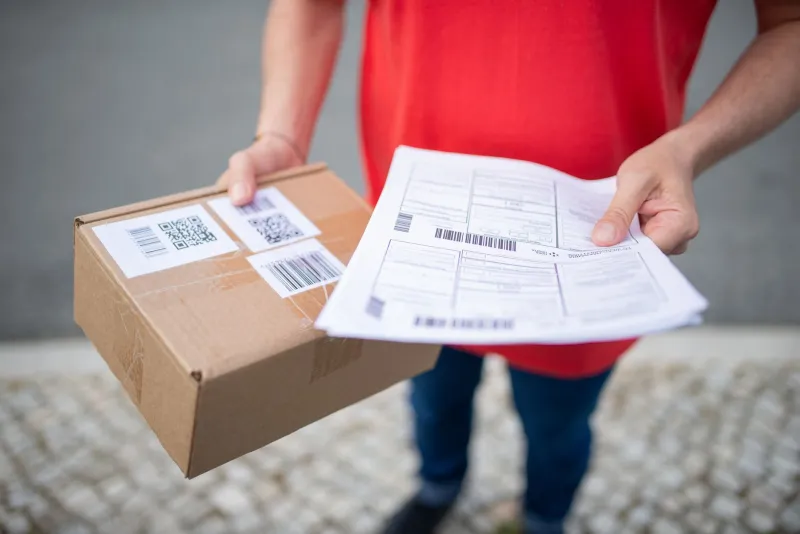
For millions of Americans, buying CBD online is no different from ordering a vitamin supplement. You browse a website, select a product, enter a shipping address, and wait for a package. What most consumers do not realize is that the moment that package enters transit, it becomes subject to an overlapping web of federal statutes, state laws, and carrier policies — any one of which can transform a routine purchase into a legal complication.
This is not a hypothetical concern. Packages containing CBD products are seized, flagged, and confiscated across the country with regularity. In some cases, consumers have faced inquiries from law enforcement. Understanding why this happens — and how to avoid it — requires a closer look at how the United States actually regulates hemp-derived cannabidiol in transit.
The Federal Floor and Its Limits
The 2018 Farm Bill federally legalized hemp and its derivatives, including CBD, provided that the finished product contains no more than 0.3 percent THC by dry weight. This legislation is frequently cited by CBD retailers as blanket authorization to ship products anywhere in the country. That interpretation is incomplete.
Federal legalization establishes a floor, not a ceiling. Individual states retain broad authority to regulate or restrict hemp-derived products within their borders, and several have exercised that authority aggressively. When a shipment crosses into a state with more restrictive laws, federal legality does not automatically override state prohibition. The result is a patchwork regulatory environment where a product manufactured in compliance with federal standards may still be unlawful under the laws of the destination state.
Further complicating matters, the U.S. Postal Service and major private carriers — including FedEx, UPS, and DHL — each maintain their own internal policies on CBD shipments. The USPS updated its regulations following the 2018 Farm Bill to permit mailing of hemp-derived CBD products that meet federal requirements, but with conditions: shippers must be licensed hemp producers or retailers complying with applicable state and federal law, and documentation must accompany qualifying shipments. Violations can result in packages being treated as contraband.
States Where Shipping CBD Remains Legally Precarious
While most states now permit the sale and possession of hemp-derived CBD products, a handful maintain restrictions that create meaningful risk for consumers receiving shipments from out of state.
Idaho, for example, has historically maintained one of the strictest hemp frameworks in the nation, requiring CBD products to contain zero detectable THC — a standard more stringent than federal law. Products legal under the Farm Bill may not meet Idaho's threshold, making certain shipments potentially unlawful upon arrival. South Dakota and Iowa have at various points maintained similarly restrictive postures, though regulatory environments in these states have been subject to change as legislatures revisit hemp policy.
Consumers should also be aware that even in states with permissive CBD laws, specific product formats — particularly ingestible items such as gummies, capsules, and beverages — may face additional scrutiny. Some states that allow CBD topicals and tinctures have not yet established clear regulatory frameworks for edible CBD products, creating ambiguity that carriers and enforcement agencies do not always resolve in the consumer's favor.
What Happens When a Package Is Flagged
The practical consequences of a flagged or seized CBD shipment vary considerably depending on jurisdiction and circumstances. In many cases, the package is simply confiscated and the consumer receives no product and no refund. In others, the recipient may receive a letter from a state agency or local law enforcement requesting information about the shipment.
Criminal prosecution of individual consumers for receiving CBD shipments is rare but not unprecedented, particularly in states where hemp-derived products remain in a legal gray zone. The greater risk for most consumers is financial: losing the cost of the order, absorbing return shipping fees, or discovering that the retailer's terms of service disclaim liability for seizures in restricted jurisdictions.
It is also worth noting that law enforcement agents in the field often lack the tools to quickly distinguish hemp from marijuana. Both are derived from the cannabis plant and are visually indistinguishable. Without laboratory testing, a package of hemp flower or even an unlabeled CBD product may be treated as marijuana until proven otherwise — a process that can take weeks and may require legal assistance.
The Retailer's Role — and Their Disclaimers
Many CBD retailers ship nationwide with minimal consideration of destination-state law. Some include broad disclaimers in their terms of service stating that the customer assumes all legal responsibility for compliance with local regulations. While such clauses may limit the retailer's liability, they do not protect the consumer from enforcement consequences.
Reputable retailers will disclose shipping restrictions prominently during the checkout process and will decline to ship to states where their products may not comply with local law. If a CBD retailer does not restrict shipping to any state, does not ask for confirmation of local legality, or buries relevant disclaimers in fine print, those are signals worth taking seriously before completing a purchase.
Practical Steps for Consumers
Navigating this environment does not require a law degree, but it does require a degree of diligence that most retailers are not incentivizing their customers to exercise. The following steps offer a reasonable framework for reducing legal and financial risk:
Verify your state's current hemp laws before purchasing. State regulations change, and information that was accurate a year ago may not reflect current law. Your state's department of agriculture website is generally the most authoritative source for hemp-specific regulations.
Review the retailer's shipping policy in full. Look specifically for language about restricted states, carrier compliance, and liability disclaimers. A retailer that openly acknowledges shipping restrictions is more likely to be operating responsibly than one that claims to ship to all fifty states without qualification.
Confirm the product's compliance documentation. Third-party lab reports verifying THC content below the federal 0.3 percent threshold are essential. Some states require this documentation to accompany shipments; even where not mandated, it provides meaningful protection if a package is questioned in transit.
Understand what you are ordering. Hemp flower, in particular, carries elevated risk during shipping because it is physically indistinguishable from marijuana. Processed products with clear labeling and sealed packaging present a lower risk profile in most jurisdictions.
Contact the carrier if uncertain. Both USPS and private carriers publish policies on hemp and CBD shipments. If a retailer's chosen carrier does not permit CBD shipments under its current policy, the shipment may be at risk regardless of legal compliance.
The Broader Picture
The confusion surrounding CBD shipping is not a product of consumer carelessness — it is a structural consequence of regulatory fragmentation. Federal law, state law, and private carrier policy operate on different timelines and with different priorities, and consumers are rarely given the information they need to reconcile those differences at the point of purchase.
Until Congress or federal agencies establish more uniform national standards for hemp-derived products — including clear preemption of conflicting state laws — the burden of navigating this complexity falls disproportionately on individual buyers. Approaching CBD purchases with the same scrutiny you would apply to any regulated product is not excessive caution. In this regulatory environment, it is simply prudent.