Third-Party Tested: The Three Words the CBD Industry Hides Behind
Scroll through any CBD brand's website long enough and you will encounter the phrase. It appears in bold type near the top of product pages, printed on label seals that mimic the visual language of regulatory certification, and repeated in FAQ sections as though it settles all questions about product quality. "Third-party tested" has become the credibility shorthand of an industry that operates without mandatory federal testing standards — and that is precisely the problem.
The phrase sounds rigorous. It implies independent verification, scientific scrutiny, and accountability to an external authority. What it actually describes is far more variable, and understanding that gap is essential to making informed decisions as a CBD consumer in the United States.
What "Third-Party" Actually Means
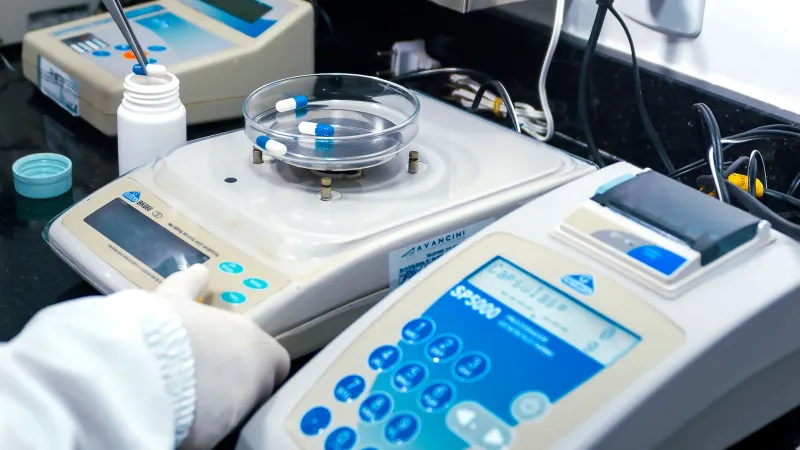
At its most basic level, "third-party tested" means that a laboratory not directly affiliated with the manufacturer analyzed the product and produced a report. That is the entirety of what the term guarantees on its own. It says nothing about which laboratory conducted the analysis, what accreditations that laboratory holds, which specific compounds were tested, how the sample was selected, or whether the results were independently verified.
The CBD market currently operates without a federal framework requiring manufacturers to use accredited labs, mandating specific testing panels, or establishing minimum performance standards for the laboratories themselves. The Food and Drug Administration has issued warning letters to companies making unsubstantiated claims, but it has not established a comprehensive pre-market testing regime for CBD products. In the absence of that structure, "third-party tested" becomes a self-defined claim — one that a brand can apply to its products with considerable flexibility about what that testing actually involved.
The Accreditation Question Most Brands Don't Answer
Laboratory accreditation is the clearest dividing line between meaningful third-party testing and testing that functions primarily as marketing. The most recognized accreditation standard for cannabis testing laboratories in the United States is ISO/IEC 17025, which establishes requirements for laboratory competence, impartiality, and consistent operation. A laboratory operating under this accreditation has been evaluated by an independent body and found to meet defined technical and management standards.
Many CBD brands publish Certificates of Analysis — the documents that report third-party test results — without specifying whether the issuing laboratory holds any accreditation. Some labs that conduct CBD testing are not ISO 17025 accredited, operate in regulatory gray zones, or have not been independently audited for the accuracy of their methods. A Certificate of Analysis from an unaccredited laboratory is not worthless, but it carries substantially less assurance than one from a facility whose methods and competence have been externally validated.
When a brand's website or product label does not identify the testing laboratory by name, or provides a Certificate of Analysis without a verifiable lab address and accreditation number, the evidentiary value of the "third-party tested" claim diminishes sharply.
What Most Tests Actually Cover — And What They Don't
Even certificates from reputable laboratories reflect only the specific tests that were ordered. A standard CBD potency panel confirms the cannabinoid concentration in the sample submitted. It does not confirm that every batch produced matches that concentration, that the product is free from heavy metals, that residual solvents from extraction are below acceptable limits, that pesticide residues are absent, or that microbial contamination is within safe ranges.
A comprehensive Certificate of Analysis should include results for cannabinoid potency, residual solvents, heavy metals (arsenic, cadmium, lead, mercury at minimum), pesticides, and microbial contaminants. Many brands publish potency-only certificates and describe the product as "third-party tested" without noting that only one dimension of safety was evaluated. A product can pass a potency test while containing detectable levels of lead. The certificate, in that case, is accurate — and also incomplete in ways that matter to consumer safety.
The testing panel a brand selects is a meaningful signal. Brands that commission and publish full-panel testing are accepting more scrutiny than those that test only for what makes their label claims look accurate.
Sample Selection: The Problem Nobody Discusses
Laboratory testing in the CBD industry is almost universally conducted on samples provided by the manufacturer. The brand selects which product, from which batch, gets submitted for analysis. There is no standard practice of random market sampling, no requirement that brands submit products purchased from retail channels rather than directly from production, and no independent verification that the sample tested matches what is on store shelves.
This creates an obvious structural limitation. A manufacturer can submit a carefully prepared sample for certification while producing retail inventory that diverges from that formulation. Studies examining the accuracy of CBD product labeling have consistently found meaningful discrepancies between stated and actual cannabinoid content — a finding that exists precisely because third-party testing, as currently practiced, does not include systematic market surveillance.
How to Evaluate a Testing Claim Before It Influences Your Purchase
Consumers who want to extract genuine value from third-party testing claims should apply a consistent evaluation framework rather than treating the phrase itself as sufficient assurance.
First, locate the Certificate of Analysis. If a brand claims third-party testing but does not publish accessible certificates — or requires account creation to view them — that absence is informative. Legitimate testing produces documents that brands should be willing to share openly.
Second, identify the laboratory. Search the lab name independently. Verify whether it holds ISO 17025 accreditation or equivalent state-level certification for cannabis testing. A lab operating without external accreditation is not automatically unreliable, but the claim carries less weight.
Third, examine the testing scope. A certificate covering only cannabinoid potency is not a safety document. Certificates that include heavy metals, pesticides, residual solvents, and microbial counts reflect a more complete commitment to product integrity.
Fourth, check the batch number. The certificate should reference a specific batch, and that batch number should correspond to the product you are purchasing. A certificate dated eighteen months ago for a different lot number tells you very little about the bottle currently in your hand.
The Phrase Worth More Than "Third-Party Tested"
No single phrase should function as a substitute for actual due diligence, but if you are looking for language that signals more meaningful transparency, consider what brands say after "third-party tested." Brands that name specific accredited laboratories, publish full-panel certificates, provide batch-level documentation, and make that information easily accessible without friction are demonstrating a level of transparency that the phrase alone does not convey.
"Third-party tested" is a starting point for evaluation — not a conclusion. Treating it as the latter is precisely the outcome the marketing is designed to produce.