Hemp-Derived Means Less Than You Think: Decoding the CBD Industry's Most Convenient Legal Fiction
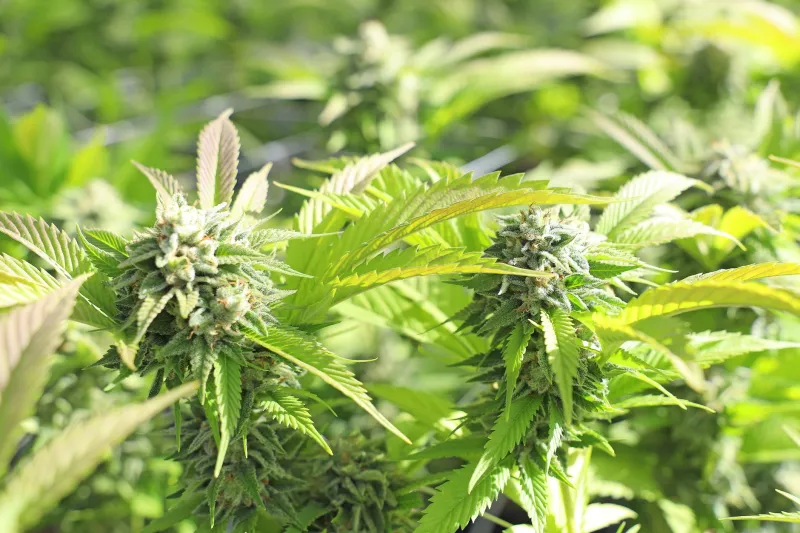
Walk into any health food store, pharmacy, or gas station in the United States, and you will find CBD products bearing the same two words on their labels: hemp-derived. The phrase carries an implicit promise — that the product is legal, natural, and distinct from marijuana. For millions of American consumers, it functions as a seal of legitimacy.
It is not.
The designation 'hemp-derived' is, at its core, a legal classification rooted in a single number: 0.3 percent THC by dry weight. That threshold, established by the 2018 Farm Bill, is what separates hemp from cannabis under federal law. It says nothing about cannabinoid concentration, extraction quality, contamination risk, or whether the plant was grown responsibly. Yet the CBD industry has built an entire marketing architecture on top of it — one that obscures far more than it reveals.
Where the Legal Definition Ends and the Marketing Begins
The 2018 Farm Bill removed hemp from the Controlled Substances Act, effectively federally legalizing the cultivation of Cannabis sativa plants containing no more than 0.3 percent delta-9 THC. This was a meaningful legislative shift. It opened pathways for domestic hemp farming, industrial research, and yes, the commercial CBD market.
What the legislation did not do was establish a regulatory framework governing how hemp-derived CBD products are manufactured, labeled, or sold. The Food and Drug Administration retains authority over ingestible products, and it has not approved CBD as a dietary supplement or food ingredient. The result is a legal no-man's-land where companies can print 'hemp-derived' on a bottle and operate with minimal federal oversight — provided they avoid making explicit drug claims.
Manufacturers understand this gap intimately. The 'hemp-derived' label signals compliance with the Farm Bill while simultaneously implying a level of safety and quality assurance the law does not actually require.
The THC Threshold Is Not a Quality Standard
One of the most persistent consumer misconceptions is that the 0.3 percent THC limit functions as a quality benchmark. It does not. A hemp plant can be grown in contaminated soil, processed with substandard solvents, and sold with an inflated potency claim — and still qualify as 'hemp-derived' under federal law.
Consider what the threshold actually measures: the ratio of delta-9 THC to the total dry weight of the plant material at the time of harvest. It is a snapshot of one compound at one moment. It tells consumers nothing about:
- Residual solvents left over from extraction
- Heavy metal contamination absorbed from the soil
- Pesticide residues from agricultural practices
- Actual CBD concentration in the finished product
- The presence of other cannabinoids, including delta-8 THC, which occupies its own regulatory gray zone
A product can carry the 'hemp-derived' label and still fail safety benchmarks that a responsible third-party laboratory would flag immediately.
How 'Hemp-Derived' Became a Sourcing Claim Without Sourcing Information
The phrase also functions as a substitute for transparency about where and how the plant was actually grown. Domestic versus imported hemp presents meaningfully different risk profiles. Hemp is a bioaccumulator — it draws contaminants from the soil with notable efficiency, which is precisely why it has been studied for phytoremediation of polluted land. Hemp grown in regions with lax agricultural oversight or poor soil testing standards can introduce contaminants into the final product regardless of how it is processed.
Most 'hemp-derived' labels provide no information about:
- State or country of origin for the raw plant material
- Farming certification status (organic, regenerative, etc.)
- Soil testing records from the growing operation
- Whether the CBD was extracted from the whole plant or synthesized from hemp biomass
The last point deserves particular attention. Certain CBD products on the market use CBD that was chemically converted from other hemp-derived cannabinoids rather than directly extracted. These products can still carry the 'hemp-derived' designation while involving substantially more chemical processing than the label implies.
Delta-8 and the Loophole Within the Loophole
No discussion of the 'hemp-derived' designation is complete without addressing delta-8 THC — a cannabinoid that has exposed just how elastic the label can be. Delta-8 THC is a psychoactive compound that occurs in trace amounts in hemp plants. However, the delta-8 products flooding the market are not naturally extracted; they are chemically synthesized from hemp-derived CBD through an isomerization process.
Because the starting material is hemp-derived CBD, many manufacturers classify the resulting delta-8 products as 'hemp-derived' — a claim that is legally defensible under current federal ambiguity but that most consumers would not anticipate when purchasing a product they believe to be non-psychoactive. Several states have moved to ban or regulate delta-8 specifically, but at the federal level, the gap remains open.
This episode illustrates a broader pattern: the 'hemp-derived' designation is not a fixed description of what is in the bottle. It is a legal starting point that manufacturers have demonstrated considerable creativity in stretching.
What Consumers Should Actually Be Asking
The 'hemp-derived' label should function as a floor, not a ceiling, of consumer due diligence. Responsible purchasing requires moving past the designation and into the specifics. When evaluating any CBD product, the following questions are worth pursuing:
- Where was the hemp grown? Domestic hemp is subject to USDA oversight; imported material may not be.
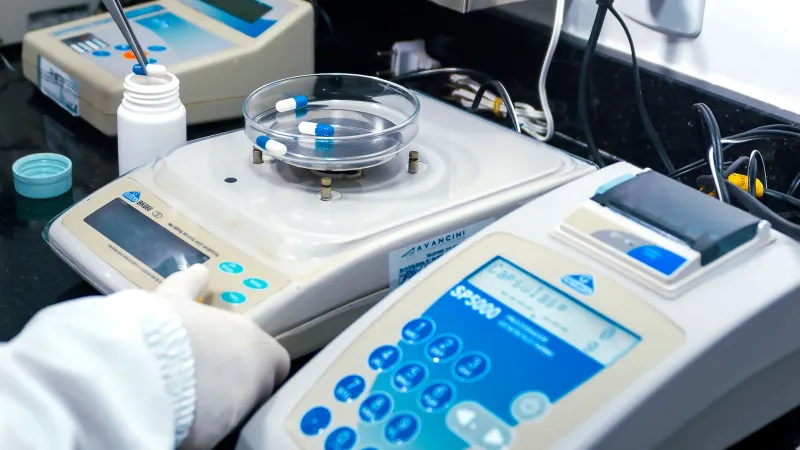
- Is a current Certificate of Analysis available? The COA should come from an accredited third-party laboratory and should include panels for potency, residual solvents, heavy metals, and pesticides — not just cannabinoid content.
- Does the COA match the product batch? A generic COA that cannot be tied to the specific lot you are purchasing offers limited assurance.
- What extraction method was used? CO2 extraction is generally considered a cleaner process than solvent-based alternatives.
- Is the CBD directly extracted or converted from another cannabinoid? This distinction matters for both safety assessment and realistic expectations about the product's effects.
The Regulatory Outlook
The FDA has acknowledged the need for a regulatory framework governing hemp-derived CBD products and has taken preliminary steps toward rulemaking. However, as of this writing, no comprehensive federal standard governs the CBD market. Several states — including California, Colorado, and New York — have implemented their own testing and labeling requirements, creating a patchwork of standards that varies considerably by geography.
Until federal standards are established and enforced, 'hemp-derived' will remain what it has always been: a legal classification that tells consumers where a product started, not what it became.
For American consumers navigating this market, the phrase deserves neither the reassurance it implies nor the dismissal it sometimes receives. It is simply the beginning of a conversation that responsible manufacturers should be willing to continue — in detail, with documentation, and without evasion.