The Diminishing Returns Problem: An Honest Assessment of CBD Tolerance for Long-Term Users

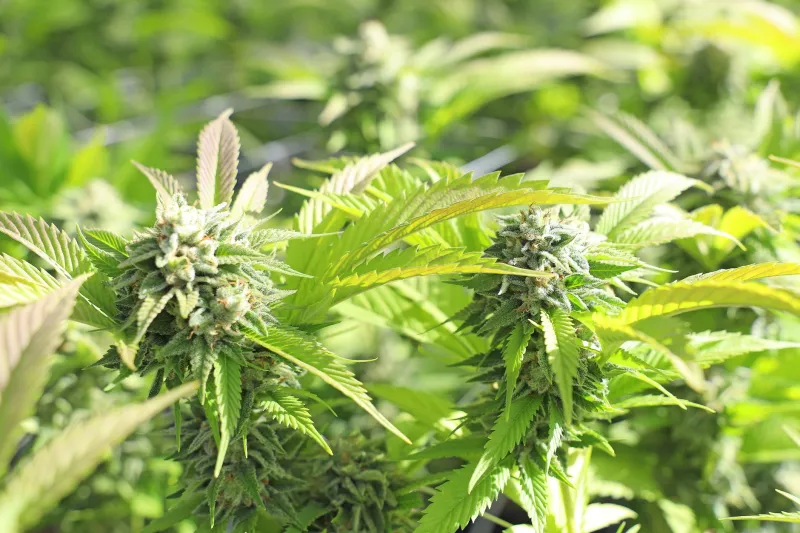
Photo: Giles Laurent, CC BY-SA 4.0, via Wikimedia Commons
The CBD industry maintains a carefully optimistic posture on the subject of tolerance. The standard narrative goes something like this: if CBD seems to be losing effectiveness, try reducing your dose for a week or two, and your sensitivity will reset. It is tidy, reassuring, and commercially convenient—because it keeps users in the product ecosystem rather than prompting them to reconsider whether CBD remains appropriate for their situation.
What the narrative frequently omits is that the science behind cannabinoid tolerance is considerably more complicated, and that for a meaningful subset of regular users, the reset protocol offers diminishing returns of its own.
Tolerance Is Not a Single Mechanism
Understanding why CBD may become less effective over time requires distinguishing between different biological processes that produce the same subjective outcome—reduced effect at the same dose.
Pharmacodynamic tolerance involves changes at the receptor level. Repeated stimulation of cannabinoid receptors can lead to receptor downregulation: the body reduces the number or sensitivity of receptors as an adaptive response to persistent activation. This process is well-documented with THC and the CB1 receptor. The picture with CBD is less straightforward, partly because CBD's mechanism of action does not rely on direct CB1 agonism in the same manner. CBD interacts with a broader array of targets—including serotonin receptors, TRPV1 channels, and endocannabinoid reuptake inhibition—which complicates both the tolerance mechanism and the reversal timeline.
Pharmacokinetic tolerance, by contrast, involves changes in how the body processes CBD over time. Repeated exposure can alter hepatic enzyme activity, potentially increasing the rate at which CBD is metabolized and reducing the effective blood concentration achieved from any given dose. This type of tolerance is less frequently discussed in consumer-facing CBD content.
A third possibility—habituation rather than true tolerance—involves the nervous system simply becoming accustomed to a stimulus that was initially novel. This is not pharmacological tolerance in the strict sense, but the functional result for the user is identical: the same dose produces less noticeable effect.
What 'Take a Break' Actually Accomplishes
The tolerance break recommendation has some legitimate basis in cannabinoid science. Studies examining THC tolerance have demonstrated that receptor density and sensitivity can partially recover with abstinence, with meaningful changes observable within as little as two to four weeks in some research participants.
For CBD, the evidence base for tolerance reversal protocols is substantially thinner. Most of what circulates in consumer-facing content is extrapolated from THC research or drawn from anecdotal reports—neither of which constitutes a reliable foundation for predicting individual outcomes.
More critically, the tolerance break framework assumes that reduced effectiveness is primarily receptor-mediated and reversible. For users who have experienced sustained, significant diminishing returns over months or years, this assumption may not hold. There is limited published research specifically examining whether long-term, daily CBD users who take structured breaks recover meaningful functional sensitivity—and what research exists does not uniformly support the optimistic framing the industry favors.
Who Faces the Greatest Risk of Persistent Diminishing Returns
Not all CBD users are equally susceptible to tolerance development, and the variables that increase risk are worth identifying explicitly.
Dose magnitude is a primary factor. Users who have progressively escalated their CBD intake—a pattern that itself often reflects emerging tolerance—have exposed their endocannabinoid system to sustained high-level stimulation. Higher cumulative exposure increases the likelihood that adaptive changes are more deeply entrenched.
Frequency of use matters as well. Daily dosing, particularly multiple times daily, provides less opportunity for baseline receptor sensitivity to recover between exposures. Users who dose once daily or less frequently may experience slower tolerance development than those who dose throughout the day.
The underlying condition also plays a role. CBD appears to interact differently with endocannabinoid systems that are already dysregulated by chronic stress, inflammation, or sleep disruption—conditions that are, not coincidentally, among the most common reasons Americans seek CBD in the first place. Whether this dysregulation accelerates tolerance development or modifies its character is an area where research remains insufficient.
Finally, individual genetic variation in cannabinoid receptor density and endocannabinoid metabolism creates baseline differences in both initial sensitivity and tolerance trajectory that no standardized protocol can fully account for.
The Question the Industry Avoids
At some point in a long-term CBD user's experience, a question arises that the industry is structurally incentivized not to ask: is continued use still producing a meaningful benefit that justifies the ongoing cost and commitment?
This is not a question about CBD as a category—it is a question about whether a specific individual's relationship with the compound has reached a point of diminishing functional utility. The honest answer, for some users, may be that CBD served a useful purpose during a particular period and that purpose has been exhausted. That is not a failure of the product or the person. It is a recognition that pharmacological tools have contexts of appropriate use, and those contexts can change.
The discomfort the industry has with this framing is understandable from a commercial standpoint. An educational resource, however, owes its readers a more straightforward accounting.
Practical Steps for Users Experiencing Reduced Effectiveness
For users who are currently navigating diminishing returns, a structured approach is more useful than indefinite dose escalation.
Begin by documenting your current dosing pattern with specificity: total daily milligrams, number of doses, timing relative to food, and the delivery format used. This baseline is necessary to evaluate whether any subsequent changes produce meaningful differences.
Consider a genuine abstinence period of no fewer than three weeks before drawing conclusions about whether a break has restored sensitivity. Shorter intervals are unlikely to produce the receptor-level changes that would alter your experience upon resumption.
If a structured break followed by resumption at a lower dose does not restore meaningful effect within four to six weeks, take that outcome seriously as data. It may indicate that the underlying mechanism driving your use of CBD has shifted, that tolerance has become more persistent than a standard protocol can address, or that a different intervention—whether pharmacological, behavioral, or otherwise—warrants consideration.
CBD is a legitimate tool with a real evidence base for specific applications. It is not, however, a permanent solution for every user who initially finds it helpful. Acknowledging that reality is not pessimism—it is the kind of honest assessment that allows consumers to make genuinely informed decisions about their health.