From Plant to Bottle: Why CBD Potency Numbers Rarely Survive the Manufacturing Process Intact
A CBD label claiming 1,000 milligrams per bottle sounds precise. It implies measurement, accountability, and consistency. What it rarely conveys is how many opportunities exist between the hemp field and that sealed bottle for those milligrams to quietly disappear — or, in some cases, to be artificially inflated before they ever reach a consumer's hands.
The cannabinoid content of a finished CBD product is not a fixed quantity. It is the result of a chain of processing decisions, each of which introduces variability. Two batches sourced from the same farm, processed by the same manufacturer, and sold under the same label can yield meaningfully different potency results in independent lab testing. That inconsistency is not always the product of negligence. Much of it is structural — baked into the chemistry of how cannabinoids behave under heat, light, oxygen, and mechanical stress.
What follows is an examination of where potency is genuinely lost, where it is sometimes manufactured on paper rather than in the product, and what the gap between raw material testing and finished product analysis actually tells consumers.
The Starting Point Is Already an Estimate
Before a single gram of hemp biomass enters an extraction system, its cannabinoid content has already been approximated rather than precisely measured. Hemp crops are sampled — typically by pulling a small percentage of plant material from across a harvest — and those samples are tested to generate a cannabinoid profile for the entire batch.
This sampling methodology introduces the first layer of variability. Cannabinoid concentrations in hemp are not uniform across a plant or across a field. The flower contains the highest density of cannabinoids; the stalk and stems contain far less. Sampling protocols vary by lab and by state, and the resulting percentage figures represent an average across what was tested, not a guaranteed uniform distribution throughout the full harvest.
When a manufacturer purchases hemp biomass and receives a certificate of analysis showing, say, 12% total CBD by dry weight, that figure is a statistical estimate. The actual cannabinoid yield from that material during extraction may differ — sometimes modestly, sometimes substantially.
Extraction Efficiency: The First Major Loss Event
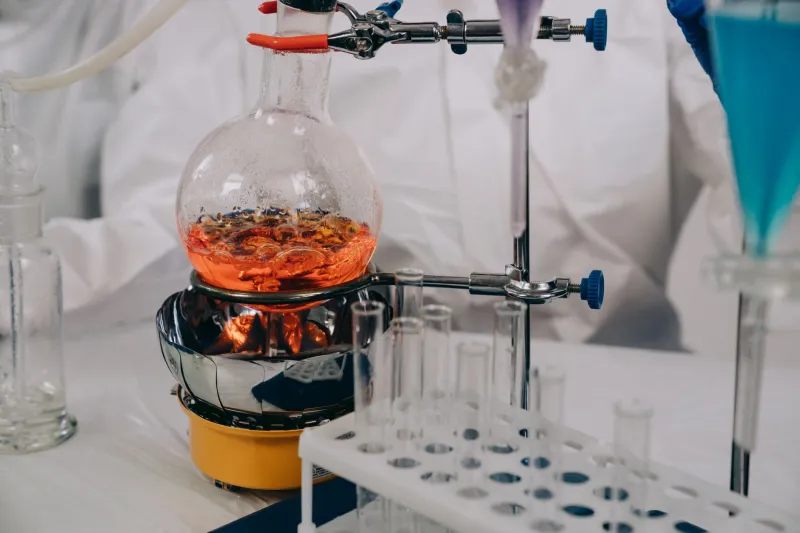
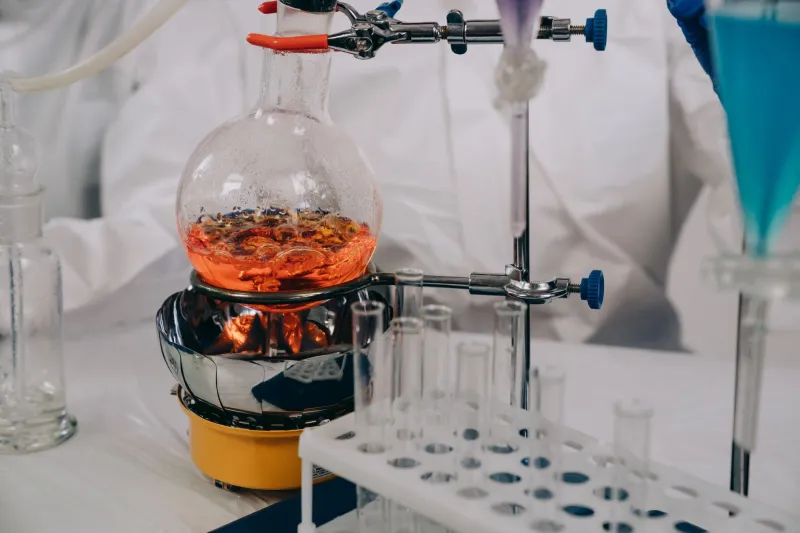
Extraction is where the largest and most predictable cannabinoid losses occur. No extraction method recovers 100% of the cannabinoids present in raw biomass. Efficiency rates vary by technology, operator skill, equipment calibration, and how well the process parameters are matched to the specific plant material being processed.
Carbon dioxide (CO₂) extraction, widely marketed as the gold standard for clean and precise processing, typically achieves extraction efficiencies in a range that can vary considerably depending on pressure, temperature, and cycle time. Ethanol extraction — another common method — can be highly efficient but introduces the additional step of solvent removal, during which heat exposure can degrade heat-sensitive cannabinoids. Hydrocarbon extraction methods carry their own efficiency profiles and post-processing requirements.
Manufacturers who optimize their extraction parameters for their specific biomass can achieve relatively consistent yields. Those who apply a one-size-fits-all approach to variable input material will see batch-to-batch fluctuation as a predictable outcome. The industry does not currently have a standardized efficiency benchmark that manufacturers are required to disclose, which means consumers have no reliable way to evaluate how efficiently a given company converts its raw material into extract.
Post-Extraction Processing and the Oxidation Problem
Once a raw extract exists, it typically undergoes additional refinement. Winterization removes waxes and lipids. Distillation concentrates cannabinoids and removes residual solvents. Decarboxylation converts the acidic precursor form of CBD (CBDA) into the active form most consumers recognize. Each of these steps involves heat, and heat accelerates cannabinoid degradation.
Oxidation is a particular concern during post-processing and storage of intermediate materials. CBD oxidizes when exposed to air, and the rate of oxidation increases with temperature. An extract stored improperly between processing steps — or held in bulk for weeks before being formulated into a finished product — can lose measurable cannabinoid content before a milligram count is ever assigned to it.
This is a meaningful source of variability that rarely appears in any disclosure a consumer receives. The time between extraction and formulation, the storage conditions applied to intermediate materials, and the oxygen exposure during blending all influence what ends up in the final product. None of these variables are currently subject to standardized reporting requirements in the US CBD market.
Where the Numbers Get Deliberately Manipulated
Not all potency discrepancies are the result of uncontrolled chemistry. Some reflect deliberate calculation decisions made at the formulation stage — and a subset of those decisions are designed to produce favorable label claims rather than accurate ones.
One documented practice involves testing raw extract at its highest potency point — immediately after production, before any degradation occurs — and using that figure to calculate the milligram count for finished products that will be manufactured weeks or months later. By the time the product is filled, sealed, and tested (if it is tested at all at the finished-product stage), the actual cannabinoid content may already be lower than the label claims.
Another approach exploits the distinction between total cannabinoid content and CBD-specific content. A manufacturer might measure all cannabinoids present in an extract — including minor cannabinoids that contribute to the total milligram figure — and present that combined number as the CBD content on the label. Consumers reading a label that says "1,000mg CBD" may not realize they are looking at a total cannabinoid figure rather than a CBD-specific measurement.
Finished product testing — meaning a certificate of analysis generated from the sealed, retail-ready product rather than from the bulk extract — is the most reliable check on these practices. Not every company performs it. Among those that do, not every company makes the results easily accessible to consumers.
What Consistent Potency Actually Requires
Producing a product whose cannabinoid content reliably matches its label is not impossible, but it requires investment in controls that many manufacturers have not prioritized. These include testing biomass at multiple points within a harvest rather than relying on a single composite sample, establishing documented extraction efficiency rates for specific equipment and input materials, testing intermediate extracts before and after each post-processing step, formulating with a buffer to account for anticipated degradation over the product's shelf life, and conducting finished product testing on sealed retail units — not just bulk extract.
Few of these practices are required by law in the US. The FDA has not finalized a regulatory framework for hemp-derived CBD products, which means the industry operates largely on voluntary compliance with good manufacturing practice standards. Some manufacturers follow those standards rigorously. Others do not.
What Consumers Can Reasonably Verify
For US consumers evaluating a CBD product, the most actionable question is whether the certificate of analysis provided was generated from the finished, sealed product or from a bulk extract. A lab report dated well before the product's manufacture date, or one that references extract rather than finished product, should prompt further scrutiny.
Consumers can also look for companies that publish multiple certificates across a product's lifecycle, or that provide batch-specific documentation tied to the lot number on the packaging. These practices do not guarantee accuracy, but they reflect a manufacturing approach that takes potency accountability seriously.
The milligram count on a CBD label is, at best, a well-informed estimate. Understanding why that estimate degrades — and how to identify the companies making a genuine effort to preserve it — is one of the more practically useful forms of CBD literacy a consumer can develop.