Does Your CBD Go Bad? The Science of Cannabinoid Degradation and What It Means for Your Shelf
Walk into almost any American medicine cabinet, gym bag, or nightstand drawer, and you're likely to find a CBD product that's been sitting around longer than its owner remembers. Maybe it was purchased during a wellness phase that faded, or it's a backup bottle that never got opened. The question most consumers don't think to ask is a straightforward one: does it still work?
The answer is more nuanced than a simple yes or no. CBD does not spoil the way food does — it won't make you sick if it's degraded — but it can lose potency in ways that are largely invisible to the naked eye. Understanding the chemistry behind that process is essential for anyone who wants to use CBD purposefully rather than just habitually.
What "Potency" Actually Means in This Context
When CBD degrades, the primary concern is the conversion of cannabidiol into other compounds. The most well-documented of these is cannabinol (CBN), which forms when cannabinoids are exposed to oxygen over time — a process called oxidation. CBN has its own pharmacological properties, but it is not the same compound as CBD, and a product that has undergone significant oxidation is no longer delivering what its label claims.
Separately, prolonged exposure to ultraviolet light can accelerate the breakdown of cannabinoids through photodegradation. Heat compounds both of these processes, accelerating the rate at which molecular bonds break down. The practical upshot: the environment in which you store a CBD product matters enormously, and the bathroom — warm, humid, and often exposed to light — is one of the worst places you could choose.
How Long Different Formats Actually Last
Not all CBD products age the same way. The carrier medium, additional ingredients, and physical form factor all influence how quickly degradation occurs.
CBD Oils and Tinctures
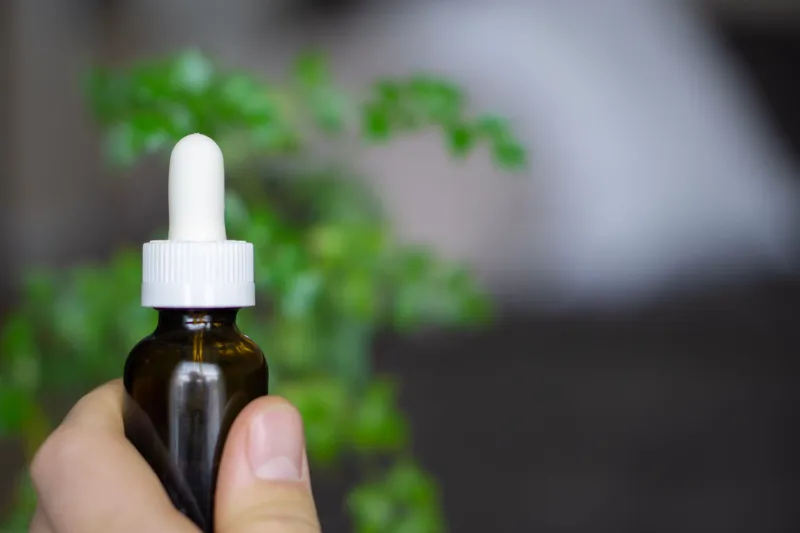
These typically have the longest shelf life among common formats, largely because reputable manufacturers use carrier oils — MCT oil, hemp seed oil, and olive oil being the most common — that themselves have meaningful stability. A well-formulated, properly stored CBD tincture can reasonably maintain potency for 12 to 24 months from the date of manufacture. After that window, oxidation becomes a significant factor. Signs that a tincture may have degraded include a noticeably darker color, a rancid or unusually sharp smell, and a change in viscosity. These are not definitive tests, but they are meaningful signals.
CBD Edibles and Capsules
Gummies, softgels, and other ingestible formats introduce additional variables. The sugars, gelatin, and flavoring agents in edibles will often degrade — and in some cases grow mold — before the CBD itself becomes the primary concern. Most edibles carry a "best by" date that reflects the stability of the food-based ingredients rather than the cannabinoid content specifically. In practice, this means that an expired gummy may be unpalatable or microbiologically unsafe long before you'd need to worry about CBD potency. Capsules with a hard shell or soft gel casing fare somewhat better, but they are not immune to heat and humidity.
Topicals — Creams, Balms, and Salves
CBD-infused topicals are perhaps the most variable category. The shelf life of a topical is largely governed by its base formulation. A water-based cream, for instance, is far more susceptible to bacterial growth and ingredient separation than a beeswax-based balm. Emulsifiers, preservatives, and the specific botanical additions a brand includes will all affect how long the product remains stable. Most topicals carry a 12-month shelf life, though anhydrous (water-free) formats like balms and salves can often remain stable for longer under proper storage conditions.
The Storage Variables That Matter Most
Three environmental factors drive cannabinoid degradation: light, heat, and oxygen.
Light — particularly UV radiation — directly breaks down cannabinoid molecular structures. This is why quality CBD oils are typically sold in amber or dark-tinted glass bottles. If you've transferred a product to a clear container, or if it's been sitting on a windowsill, you've likely accelerated degradation significantly.
Heat speeds up nearly every chemical reaction involved in degradation. The ideal storage temperature for most CBD products is a cool, stable environment — a dark cabinet away from appliances that generate heat, or in some cases a refrigerator. Avoid leaving products in a car, especially during summer months, when interior temperatures can exceed 130°F.
Oxygen drives oxidation. Every time you open a bottle, you introduce oxygen into the product. Tightly resealing containers after each use is a simple but meaningful step. Products in dropper bottles with minimal headspace fare better than those in wide-mouth jars that expose a large surface area to air.
What Lab Testing Can and Cannot Tell You
Certificate of Analysis (COA) documents from third-party laboratories are the primary tool consumers have for verifying CBD content. However, there is an important limitation that most consumers overlook: a COA reflects the product's composition at the time of testing, which typically occurs before or shortly after manufacture. It does not tell you what the product contains today, after months of storage under conditions the laboratory never observed.
Some degradation markers — elevated CBN levels, for instance — would theoretically appear on a comprehensive cannabinoid panel. But unless you're sending your year-old tincture to a lab yourself (a service that does exist, though it's rarely used by individual consumers), you're working from historical data.
This is not a reason to dismiss COAs. They remain the most important document a consumer can review before purchasing a CBD product. But it is a reason to treat them as a snapshot rather than a guarantee of current potency.
Practical Takeaways for Consumers
The goal here is not to create anxiety about every CBD product on your shelf. It's to encourage a more deliberate approach to purchasing, storage, and use.
Buy quantities you'll realistically use within 12 months. Purchasing in bulk may seem economical, but if a product sits unused past its optimal window, the savings are illusory. Store products in a cool, dark location — a kitchen cabinet away from the stove, or a bedroom drawer, will generally outperform a bathroom cabinet. Check manufacture dates when purchasing, and prioritize brands that provide them. Note any changes in color, smell, or texture over time, as these are imperfect but practical indicators of degradation.
Finally, recognize that a degraded CBD product is not necessarily harmful — but it may not be doing what you purchased it to do. In a category where products are already expensive and efficacy can be difficult to assess, using a degraded product compounds both problems. Informed storage habits are a low-effort way to protect both your investment and the consistency of your experience.