The Question Before the Operating Room: CBD, Anesthesia, and the Liver Enzymes That Connect Them
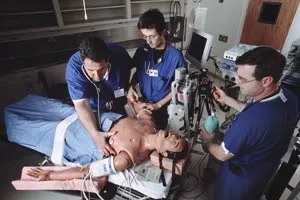
Photo: Bernd Frankenberger, 2001; Klinikum der Universität Mainz (D), CC BY-SA 3.0, via Wikimedia Commons
Preoperative questionnaires are thorough about prescriptions and inconsistent about the rest. Patients are asked about blood thinners, insulin, and herbal supplements in the same breath, and many mention their multivitamin while leaving out the tincture they have used nightly for a year. CBD occupies an ambiguous place in the patient's mind — closer to a wellness habit than a drug — which is precisely why it belongs in the conversation.
Why the Anesthesia Team Cares About a Wellness Product
The concern is not that CBD is dangerous under anesthesia in any established, well-characterized way. The concern is that the interaction is incompletely studied, and anesthesia is a discipline built on predictable pharmacology. Anesthesiologists titrate drugs to effect in real time, but they still rely on expectations about how quickly a given dose will clear. When a substance alters drug metabolism, those expectations narrow.
The Enzyme Overlap
Cannabidiol is metabolized primarily through the cytochrome P450 system, with CYP3A4 and CYP2C19 doing substantial work and CYP2C9 contributing. More relevant to surgical planning, CBD has demonstrated the capacity to inhibit several of these enzymes, and chronic high-dose use may produce a different picture than a single exposure.
The drugs used in and around surgery overlap with those pathways considerably. Midazolam, a standard premedication and sedative, is a CYP3A4 substrate. Many opioids used for analgesia are processed through the same family. Propofol, lidocaine, ketamine, and various muscle relaxants each depend on hepatic clearance to a greater or lesser degree. Additive central nervous system depression is a further consideration when CBD is combined with benzodiazepines or opioids, and CBD's effect on blood pressure and heart rate — modest in healthy users — is worth knowing before induction.
The honest summary of the literature is that the magnitude of these interactions in a surgical setting is not well quantified. That is not a reason for alarm. It is a reason for disclosure, because the anesthesiologist can adjust when they know.
Timing, Dose, and Daily Versus Occasional Use
An occasional 10-milligram gummy and a nightly 100-milligram full-spectrum regimen are functionally different exposures. Chronic, high-dose users are more likely to have accumulated measurable effects on enzyme activity; they are also more likely to experience discontinuation effects if they stop abruptly the day before surgery.
The timing question is therefore more nuanced than a blanket instruction to quit a week out. Abrupt cessation of a product used daily for sleep or anxiety can produce rebound symptoms in the perioperative window, when stress is already elevated. The better approach is to give the anesthesia team the facts — dose, frequency, product type, last use — and let them advise on timing.
One additional point deserves mention: full-spectrum and broad-spectrum products may contain THC, and THC has its own interactions with sedation and with bleeding risk at high exposures. Hemp-derived does not mean cannabinoid-free.
What to Say, and Where to Say It
A single sentence covers the essentials: what you take, how much, how often, and when you last took it. Bringing the label or a batch certificate of analysis is helpful, particularly for products where the cannabinoid content is not clearly printed.
Disclosure should go to three parties: the surgeon, the anesthesiologist or nurse anesthetist conducting the pre-anesthesia evaluation, and the pharmacy or medication reconciliation staff. It should be given in writing where possible.
Concerns about judgment or documentation are understandable but largely misplaced. Clinical records are protected health information, and an anesthesiologist's interest in a supplement is pharmacological, not moral. The purpose of the question is to keep the patient safe during a period when the patient cannot advocate for themselves.
What Not to Do
Do not conceal use and then stop it silently two days before surgery, which produces the worst combination: an uninformative history and an unmanaged withdrawal. Do not assume a product is irrelevant because it is sold without a prescription. Do not use a sedative or opioid at home in the days before surgery to manage anxiety without telling the surgical team, as the additive effects are the same either way.
A Disclosure That Costs Nothing
CBD is not a contraindication to anesthesia. It is a medication history item, and the correct handling of a medication history item is to report it. The conversation takes less than a minute, and it is the rare instance in medicine where a patient can materially improve their own safety with nothing more than an accurate answer.